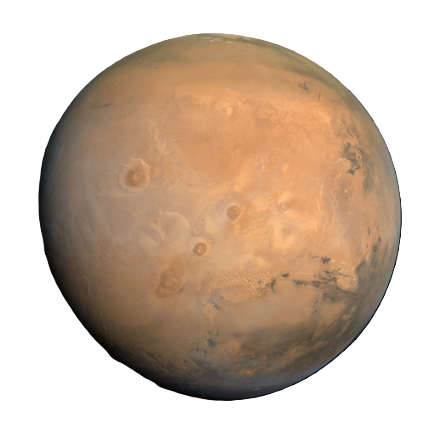
Mars, the Red Planet, has captivated human imagination for centuries. Its reddish hue comes from iron oxide (rust) on its surface. Mars has a thin atmosphere, mostly carbon dioxide, and is home to the tallest volcano (Olympus Mons) and the largest canyon (Valles Marineris) in the Solar System.
Mars is a prime candidate for the search for past or present life due to evidence of ancient rivers, lakes, and oceans. Robotic explorers like the Perseverance Rover are studying its surface to uncover its secrets.
Mars likely formed from the accretion of rocky materials and retains traces of its volcanic and fluvial past. Its structure includes:
Mars’s history of water makes it a prime target for studying potential past life and future human colonization.